
Committed to Action!

We are committed to responding to the feedback and recommendations of the Youth Advisory Council through implementation and action. Activities to honor their feedback are already under way. Check out what we're working on:
- Youth Advisory Council Reports
-
-
Youth Advisory Council Report: 2022 Cohort
-
Here's a four-page summary of feedback we heard from the YAC in 2022
-
-
- Teen Health Hub WA
-
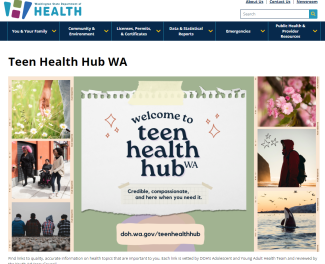
Throughout 2023, DOH collaborated with members of the Youth Advisory Council and youth interns and volunteers to cocreate a new DOH webpage just for teens and young adults. Teen Health Hub WA is a curated directory of accurate and reliable health information. This activity is an example of our implementation of the YAC's recommendation for increased access to high quality, accurate and reliable health information for young people.
Check out Teen Health Hub WA in the news!
-
595: Teens Get Online Health Hub, Indiana Funding Plan Discussed Today (astho.org)
-
Your Local Epidemiologist: Public Health Accomplishments in 2023
-
- Health Care How To: Doctor's Appointments
-
The Youth Advisory Council recommended that trusted adults and organizations create how to guides on important adolescent health topics and health care navigation.
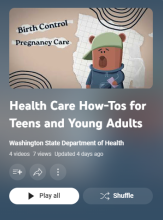
Healthcare How To videos: How to Schedule a Doctor's Appointment and How to make sure your appointment stays confidential. These are available and English and Spanish on our YouTube Playlist: Health Care How-Tos for Teens and Young Adults - YouTube
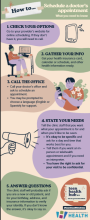
How to Schedule a Doctor's Appointment: What you Need to Know - Brochure about scheduling a doctor's appointment and telephone script in English and Spanish (PDF)
- Health Care How To: Privacy and Confidentiality for Teens
-
The Youth Advisory Council said young people want to know more about their health care rights, including what health care services they can consent to on their own, and what health information their provider will keep confidential.
In response, we've developed several new resources for young people and for youth-serving health care providers:
-
We collaborated with the University of Washington's Leadership Education in Adolescent Health team to develop a guide for youth on confidentiality and privacy. The Youth Advisory Council reviewed the guide and gave feedback and recommendations on improvements to make it youth-friendlier.
-
We collaborated with the Adolescent Health Initiative at the University of Michigan Health to develop a Sparks training for youth-serving health care providers in Washington. The training focuses on best practices for understanding and interpreting Washington's minor consent laws and providing confidential care for youth. The free training includes a facilitator's guide, a slide presentation, vignettes to practice what was learned, a handout, and a health care rights poster for youth.
-
Download training materials at AHI's Sparks: Confidentiality Laws and Minor Consent (webpage)
-
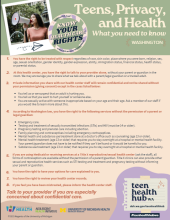
Download the Teens, Privacy, and Health poster in English and Spanish (PDF)
-
-
We collaborated with the Youth Advisory Council to create a new video called: How to keep your health information confidential.
-
Check it out on our playlist at: Health Care How-Tos for Teens and Young Adults - YouTube (webpage)
-
-
- Health Care How To: Emergency Contraception FAQ
-
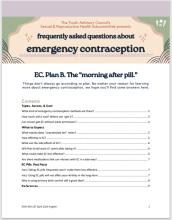
The YAC's Sexual and Reproductive Health Subcommittee worked with experts at DOH to develop a new FAQ about emergency
contraception - also known as Plan B or the "morning after pill". The Subcommittee came up with the idea for an FAQ on this topic, brainstormed questions young people want answers to, and collaborated with DOH staff to research answers to the questions and design the tool, available in English and Spanish (PDF)
- Health Care How To: Adolescent Well-Visits
-
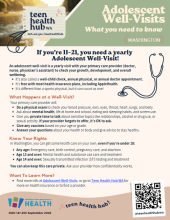
Washington youth made recommendations to help prepare and explain adolescent well visits to young people. To do this, DOH collaborated with youth to develop tools and resources to support teens, young adults, and their caregivers.
-
What you need to know about well visits flyer: We created this informative flyer about adolescent well visits in response to the questions young people have about regular visits to the doctor.
-
Available for digital download in English (pdf).
-
-
What to expect at your yearly checkup video: We collaborated with Amaze.org and the YAC to create an explainer video about how to prepare for an adolescent well visit, what to expect during an adolescent well visit, and what to do after.
-
Check out the video and support materials at Personal Safety: A Yearly Checkup: Before, During & After a Doctor’s Visit – amaze (Webpage and video)
-
-
Adolescent well visit webpage: DOH staff also worked together to make important updates to the DOH Child and Adolescent Well Visit webpages. These pages now contain important information for parents, caregivers, providers, and teens and young adults.
-
Learn more at Child and Adolescent Well-Visits | Washington State Department of Health (webpage)
-
-
- Health Care How To: A Guide to Understanding Eating Disorders
-
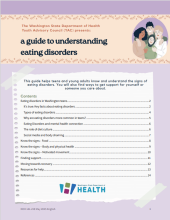
The YAC's Food and Nutrition Subcommittee worked with experts at DOH to develop a new guide to understanding eating disorders. The Subcommittee came up with the idea for an FAQ on this topic, brainstormed questions young people want answers to, and collaborated with DOH staff to research answers to the questions and design the tool. This is available in English and Spanish (PDF)
- Peer Support Services in Schools
-
The Youth Advisory Council recommended more information about and access to peer support for behavioral health needs. To respond to this recommendation, we are piloting a new grant type for school-based behavioral health peer support services. These grants ended in 2025.
- Youth Friendly Care Network
-
In 2025, DOH collaborated with the YAC to launch a statewide initiative to promote youth-friendly care. The initiative, called the Youth Friendly Care Network, brings youth-serving medical and behavioral providers together to learn more about youth-friendly care and integrate youth-defined care principles and practices into care delivery for teens and young adults. Learn more at Youth Friendly Care Network | Healthier Washington Collaboration Portal (webpage)
- Mini Skills Session: Responding to Youth Loneliness - A Strengths-Based Approach
-
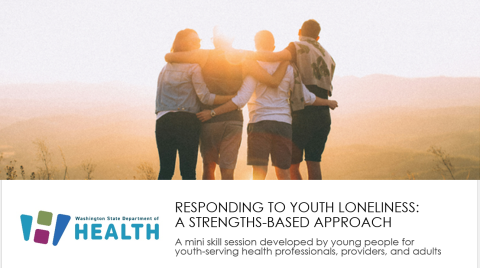
The YAC created a training for youth-serving providers and professionals to help them have more supportive, strengths-based conversations with young people experiencing disconnection.
The YAC intern led the group for 3 months to co-create the training content in partnership with DOH subject matter experts. AYAH staff then pilot tested it with the Youth Friendly Care Network and DOH colleagues to collect and implement feedback.
The resulting 30-minute skill session is called Responding to youth loneliness: A strengths-based approach. It helps participants:
- Practice using empathy and strengths-based language
- Understand how social media may impact a young person’s sense of self
- Recognize how loneliness can show up in youth
The training is designed for providers, professionals, and caring adults who work with adolescents and young adults ages 12–24. No expertise required.
The session includes perspectives from young people, 3 practice scenarios, discussion questions, reflection time, and resources for more information or help.
And anyone can lead the session. A facilitator’s script is included in the “notes” section of the power point slides.
Download the training (PDF PowerPoint)
- Navigating Health Insurance: A Guide by and for Youth
-
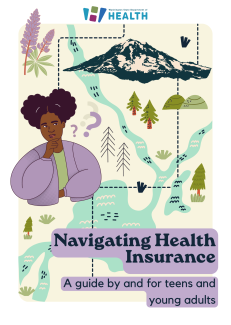
The YAC created a guide for teens and young adults to help with understanding and navigating health insurance. The YAC Youth Intern worked with the YAC to create the guide based on young people's questions, worries, and need-to-know. Partners at the Washington State Health Care Authority helped review the guide for accuracy and ensure content was up-to-date.
- Collaboration with the American Society for Emergency Contraception (ASEC): Over-the-Counter Contraception Access
-
Since 2013, the American Society for Emergency Contraception (ASEC) has conducted an Emergency Contraception (EC) Access Survey biennially. The 2024 survey added questions about availability of the new over-the-counter birth control pill, Opill, which hit shelves in March 2024. Learn more about ASEC and their biennial survey on the ASEC website.ASEC distributed the 2024 online survey via the ASEC listserv and through national partner organizations from May 2024 to Jan 2025. Many YAC members chose to participate in the survey and share it with peers. Participants visited local pharmacies to report on what makes accessing contraception products easy or difficult. The results will help teams at DOH and the Washington State Health Care Authority improve access to contraception for all Washingtonians.
Results from Washington are available: Check out the report (PDF).