
Scientific Statements and Clinical Guidance
also on this page
Scientific Statements
Periodontal Disease and Atherosclerotic Cardiovascular Disease
The American Heart Association statement from February of 2026 reviews and updates evidence showing an association between periodontal disease and atherosclerotic cardiovascular disease, highlighting shared inflammatory mechanisms and potential links between poor oral health and higher risks of heart attack, stroke, and other cardiovascular events.
Risk Assessment for Blood Pressure Management
In September of 2025, the American Heart Association/American College of Cardiology scientific statement summarized the rationale to recommend the use of the Predicting Risk of Cardiovascular Disease Events equations, the evidence base for the updated threshold of 10-year risk of cardiovascular disease of ≥7.5%, and the population-level implications of these revised recommendations.
Clinical Guidelines
High Blood Pressure

The American Heart Association, American College of Cardiology, and several other health organizations released a comprehensive guideline with recommendations regarding the diagnosis, treatment, and prevention of hypertension.
- Top 10 Takeaway Messages
- Clinical Practice Guidelines
- Target: BP Webinar on the 2025 AHA/ACC High Blood Pressure Guidelines
- Continuing Medical Education Course: 2025 AHA/ACC Guideline for the Prevention, Detection, Evaluation and Management of High Blood Pressure in Adults with a Renewed Focus on BP Control
The 2025 AHA/ACC High Blood Pressure guidelines include the updated recommendation to use the PREVENT™ (Predicting Risk of Cardiovascular Disease Events) cardiovascular disease risk equation when assessing certain patient populations.
3 Key Takeaways
- Aim for blood pressure below 130/80 mm Hg for most adults to reduce the risk of heart disease, stroke, kidney disease, and dementia.
- Start with healthy lifestyle changes and use overall cardiovascular risk to guide medication decisions, including the PREVENT risk calculator when appropriate.
- Support accurate home blood pressure monitoring and team-based care to help people reach and maintain their blood pressure goals.
High Blood Pressure Treatment Algorithm for Adults
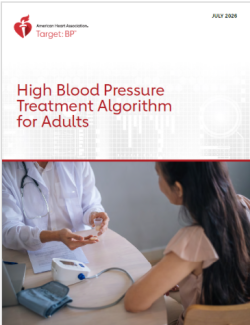
High Blood Pressure Treatment Algorithm for Adults is a resource created by Target: BP and aligned with the 2025 AHA/ACC High Blood Pressure Guidelines. The treatment algorithm helps health care professionals diagnose and manage high blood pressure using home blood pressure readings, personalized treatment goals, appropriate medication, and healthy lifestyle changes.
This resource also supports timely follow-up, helps patients take medications as prescribed, reduces side effects and medication costs, and integrates easily into workflows for health care teams and electronic health records.
Blood Pressure Screening and Control Report and Guidelines
In February of 2026 the Bree Collaborative released Blood Pressure Screening and Control Report and Guidelines (PDF) with coordinated, multilevel strategies that span sectors both inside and outside of health care. The report and guidelines focus on the health care ecosystem's role in addressing hypertension screening, control, and equity.
3 Key Takeaways:
- Screen blood pressure accurately at every opportunity and quickly connect people with elevated readings to care.
- Support individualized blood pressure goals through shared decision-making, home monitoring, and team-based care.
- Identify and address disparities in blood pressure screening and control by improving access, sharing data, and providing culturally and linguistically appropriate resources.
Dyslipidemia Guidelines
In March of 2026, the American College of Cardiology, the American Heart Association, and several other health organizations released the Guideline on the Management of Dyslipidemia, which replaces the 2018 guidelines. The guidelines provide evidence-based recommendations for lipid management and cardiovascular risk reduction in both primary and secondary prevention. Earlier identification of risk can help people take action sooner to lower their chances of heart attack and stroke. For guidelines-at-a-glance and clinical resources, see the 2026 Dyslipidemia Guideline Hub.
3 Key Takeaways:
- Use the PREVENT™ (Predicting Risk of Cardiovascular Disease Events) cardiovascular disease risk equation to estimate 10- and 30-year cardiovascular risk and guide treatment decisions.
- Follow risk-based LDL cholesterol goals, with lower targets for people at greater risk.
- Consider additional testing—such as lipoprotein(a), apolipoprotein B or coronary artery calcium—when appropriate to better understand and manage risk.
High Cholesterol Shared Decision-Making Guides for Health Care Providers and Patients
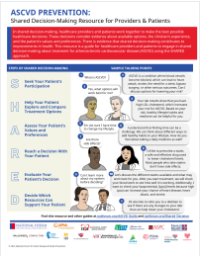
The National Forum for Heart Disease & Stroke Prevention: Value & Access Collaboration created shared decision-making guides on statin treatment for health care providers and patients. Topics include:
Cardiovascular-Kidney-Metabolic (CKM) Syndrome
First-Ever Cardiovascular-Kidney-Metabolic Syndrome Guidelines
The American Heart Association, American College of Cardiology, and two other medical organizations in July 2026 released Cardiovascular-Kidney-Metabolic Syndrome Guidelines. These guidelines help health care providers better assess and communicate how heart, kidney, and metabolic conditions work together to affect a person’s health. Using a consistent risk assessment can identify people at risk earlier, support shared decision-making, and connect them with preventive care and treatment sooner.
3 Key Takeaways:
- Heart, kidney, and metabolic health are closely connected. Screening and treatment should address the full range of CKM risk factors, including blood pressure, cholesterol, blood sugar, body weight, and kidney function.
- Earlier risk assessment can prevent serious disease. The Predicting Risk of Cardiovascular Disease Events (PREVENT™) risk equation can help health care providers estimate short- and long-term risk and guide personalized prevention and treatment decisions.
- Healthy lifestyle changes are essential at every stage. Access to nutritious food, physical activity, healthy weight support, medications, and coordinated care can help prevent or slow CKM syndrome.
CKM Care Clinical Quickstart Guide
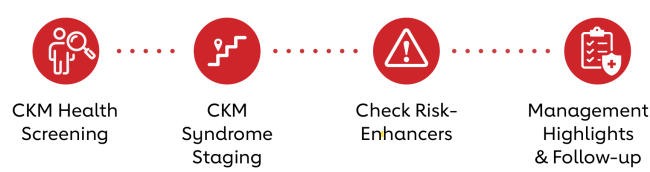
The American Heart Association created a CKM Care Clinical Quickstart Guide (PDF) to help health care providers easily align their practice with changing science. Treating cardiovascular, kidney, and metabolic conditions as an interconnected system improves health outcomes.
Use the CKM Quickstart Guide to:
- Step 1 - Screen for CKM risk factors
- Step 2 - Stratify CKD risk
- Step 3 - Calculate risk estimates
- Step 4 - Consider risk enhancers
- Step 5 - Stage CKM Syndrome
- Step 6 - Refer to treatment algorithm
- Step 7 - Monitor by therapeutic need
Cardiovascular Health in Girls and Women: A Multi-Society AHA Collaboration
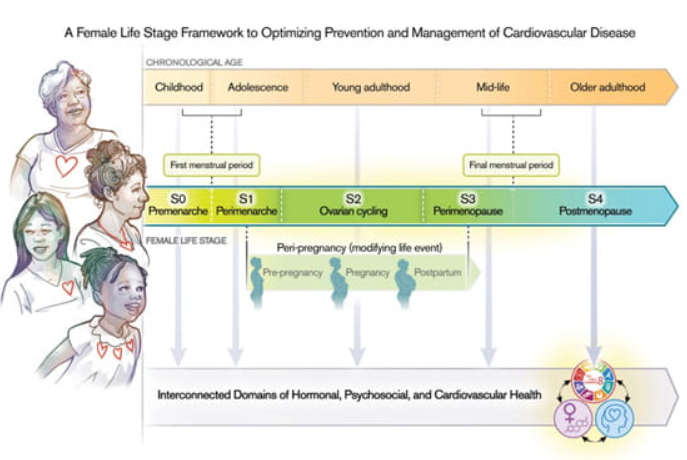
A redefined framework for cardiovascular health for girls and women by the American Heart Association in collaboration with the American Academy of Pediatrics, the American College of Obstetricians and Gynecologists, and the Society for Maternal-Fetal Medicine. The framework focuses on the interconnectedness of hormonal, psychosocial, and cardiovascular health across the female life stages.
The Cardiovascular Health in Girls and Women Resource Center: