This course is for people who work in HIV, bacterial STIs, hepatitis C, and overdose prevention that are looking to expand their knowledge around syndemics.
Office of Infectious Disease Syndemic Services
Ready to learn more about syndemics?
Who We Are
The Office of Infectious Disease within the Washington State Department of Health provides services to prevent and control sexually transmitted infections, HIV, and viral hepatitis, and assesses the incidence and prevalence of these diseases. The office is also responsible for the HIV Client Services Early Intervention Program, which pays for medications, insurance premiums and limited medical, mental health, and dental care for low-income, eligible people living with HIV; and for supporting efforts to improve the health of people who use drugs, including support for syringe service programs and administration of the statewide Overdose Education & Naloxone Distribution Program. It tracks and assesses disease and health conditions by collecting, analyzing, and evaluating data. It also maintains databases that aid in prioritizing resources toward current data trends.
See How to Contact Us and Our Materials for Contractors
Contact Information
Reach out to our specific groups for questions or support related to their subject matter:
For any website-related questions, email Kari Haecker.
Contract Resources
Syndemic Fiscal and Contract Information (PDF)
Syndemic Prevention Contracted Partner List (PDF)
FY26 Contract Launch - May 14, 2025:
- Slides (PDF)
- Webinar Recording (YouTube)
FY25 Contract Launch - January 25, 2024:
- Slides (PDF)
- Webinar Recording (YouTube)
Website Purpose
This website serves as a place for DOH required trainings, deliverable grids and workplans, guidance documents, and other resources.
Many agencies throughout the state, both local health jurisdictions and community-based organizations, are funded and contracted to provide Syndemic services in the following categories:
- Community-based integrated infectious disease testing and linkage to services/navigation support in high-impact settings
- Syndemic service navigation
- Syringe Services Programs
- Mail-order naloxone project
- Innovative Syndemic community engagement and community-drive capacity building projects
What is a Syndemic?
Syndemics are a clustering of two or more social or health conditions within a population—such as sexually transmitted infections (including HIV), viral hepatitis, substance use disorder, and mental health conditions.
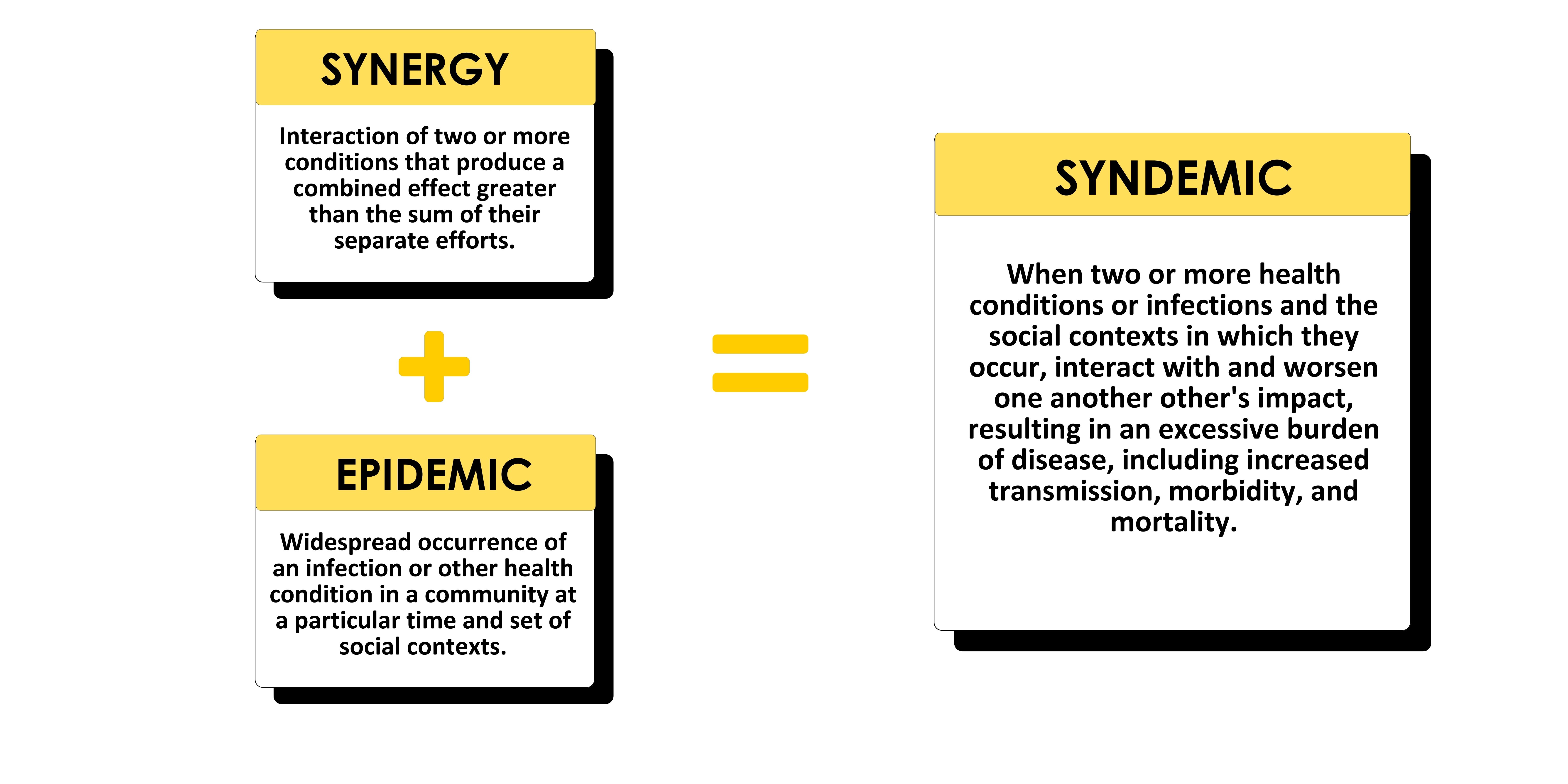
Syndemics are made worse by social and economic factors, including racism, homophobia, stigma, poverty, and other structural barriers, that contribute to increased prevalence or severity and ongoing health disparities.
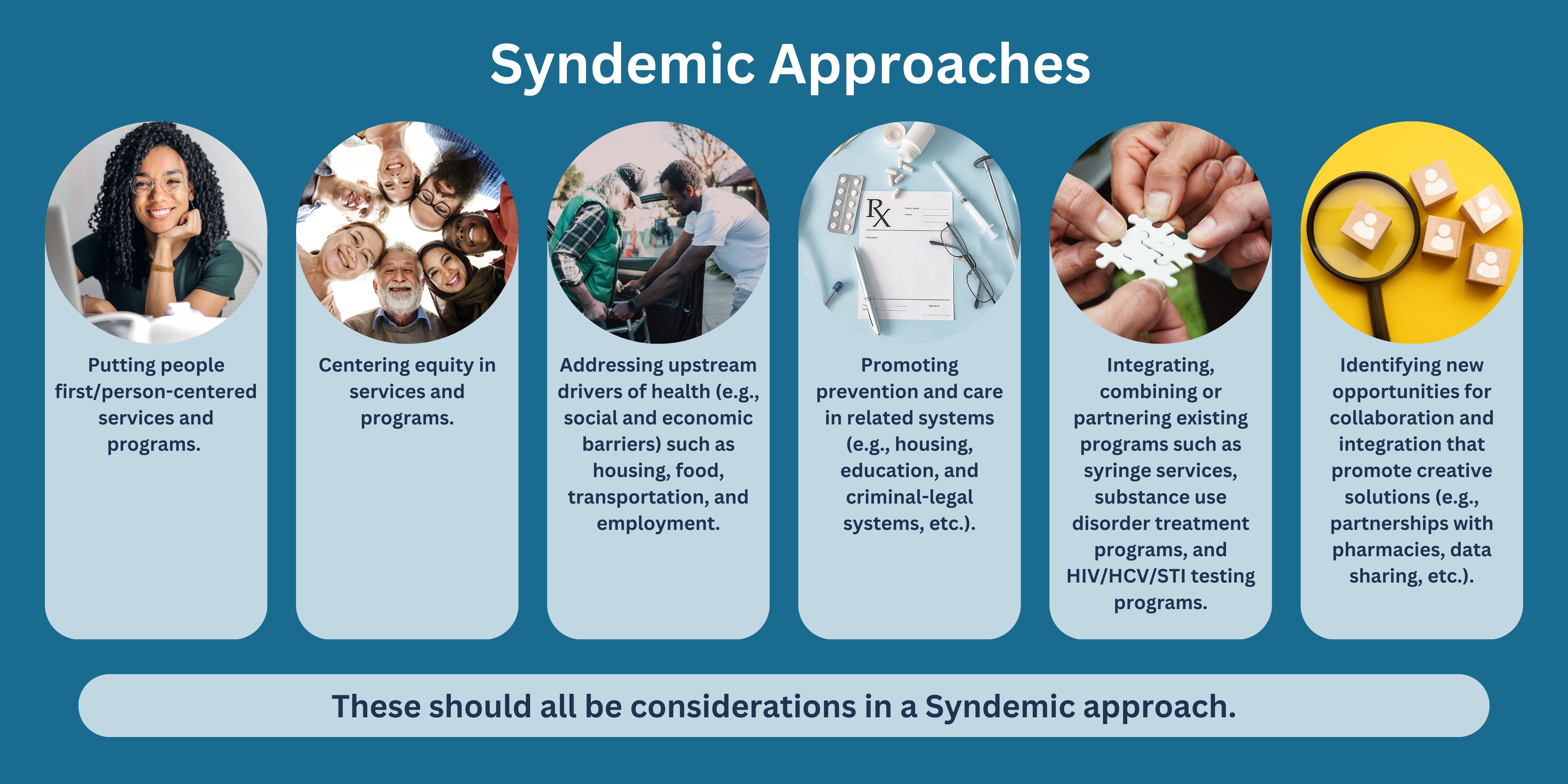
A Syndemic approach works to address the root causes of these conditions.