RCAH Financial Resources
sections on this page
Resources to support your financial operation
This resource library is designed to support Critical Access Hospitals (CAHs) in navigating the complex landscape of rural health care finance. Here you will find tools, guides, templates, and best practices tailored specifically for CAHs—whether you're managing day-to-day operations, strategic planning, or compliance and reporting. Our goal is to help your organization achieve financial sustainability while continuing to deliver high-quality care in rural communities.
Explore the materials, share them with your team, and check back regularly for updates and new resources.
State Office of Rural Health Financial Technical Assistance
Our SORH program supports activities to improve financial stability of rural health systems in Washington. These activities include:
- Charge Master reviews
- Alternative Payment Model Work Groups
- Feasibility studies
- Specific staff training
- Billing and coding training
- Financial consultant assessments
- Cost report analyses
- Hospital level financial improvement initiatives
- CFO summits and cohorts
- Revenue cycle optimization
- Cost containment strategies
- Leveraging telehealth and swing bed utilization
- Workforce efficiency
- Strategic service line development
- Participation in value-based payment
- Financial and operational metric dashboards
- Support for continuing education and professional development
For more information on participating in any of these activities please contact DOH's Office of Rural Health.
Rural and Critical Access Hospital Financial Resources
Revenue Cycle Management Best Practices Guide
This guide provides rural hospital executive management teams with generally accepted best practice concepts in revenue cycle management (PDF) so they may consider opportunities for performance improvement within their own hospitals and individual departments.
Critical Access Hospital Financial Sustainability Guide
This guide is intended for state Medicare Rural Hospital Flexibility (Flex) Program (PDF) personnel, leaders of critical access hospitals, and other individuals and/or teams that provide guidance and assistance to these providers in managing their long-term financial stability.
While CAH finance can be complex, this guide is designed to be as non-technical as possible while providing guidance and strategies regarding various potential interventions CAHs may employ to address ongoing and systemic financial challenges in the rural health care setting. Successful adoption and implementation of the interventions will assist CAHs in improving overall performance over the long term to enhance financial stability.
Hospital Price Transparency Fact Sheet
The Medicare Learning Network Fact Sheet (PDF) explains the Hospital Price Transparency Final Rule, which requires every U.S. hospital to provide clear, accessible pricing information about the items and services they provide on a publicly available website in 2 ways:
- A comprehensive machine-readable file with all items and services
- A consumer-friendly display of shoppable services
These 2 methods help ensure consumers can find hospital-specific charges for any item or service the hospital provides and can also get a user-friendly, plain language display of pricing information for certain hospital services. This makes it easier for consumers to:
- Shop and compare prices across hospitals
- Assess the cost before getting care
Small Rural Hospital and Clinic Finance 101
The Small Rural Hospital and Clinic Finance 101 manual (PDF) was developed for use by State Flex Programs and all rural health systems. The content is designed to be as non-technical as possible and to provide answers to frequently asked questions regarding CAH, PPS, and RHC finance and financial performance.
340B Drug Pricing Program – Overview for Critical Access and Rural Hospitals
The 340B Drug Pricing Program allows eligible health care providers, including Critical Access Hospitals (CAHs) and certain rural hospitals, to purchase outpatient drugs at significantly reduced prices. The goal is to help safety-net providers stretch scarce resources, improve patient care, and enhance financial sustainability.
Key Features
- Discounts: Eligible hospitals can purchase outpatient drugs at 25–50% below wholesale prices.
- Eligibility: CAHs, Sole Community Hospitals, Rural Referral Centers, and Disproportionate Share Hospitals can qualify if they meet specific criteria (e.g., Medicare cost report filing and contract with Medicaid).
- Use of Savings: Savings must support patient care, particularly for underserved populations—often reinvested into community health services, charity care, or operational improvements.
- Covered Outpatient Drugs: Includes prescription medications administered in outpatient settings, but not inpatient drugs.
- Program Oversight: Administered by the Health Resources and Services Administration (HRSA); participants must comply with program integrity requirements, including audits and recordkeeping.
Benefits for Rural and CAH Providers
- Financial Relief: Helps offset low reimbursement rates and the high cost of care in rural settings.
- Service Expansion: Allows hospitals to fund expanded services such as behavioral health, pharmacy access, or chronic disease management.
- Sustainability: Supports long-term viability of rural hospitals serving vulnerable populations.
**340B covered entities must annually recertify their eligibility to stay in the 340B Program and to continue purchasing covered outpatient drugs at discounted 340B prices. If a 340B covered entity fails to recertify during the scheduled timeframe for recertification, they will be terminated from the 340B Program.**
Websites with 340B Drug Pricing Program Resources
340B Office of Pharmacy Affairs
HRSA 340B Drug Pricing Program
HRSA 340B Educational Resources
Rural Health Innovation Micro-Funding Program
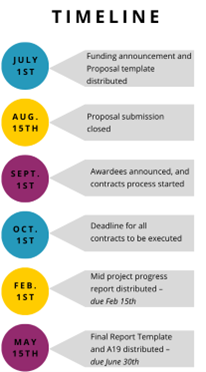
The Rural Health Innovation Micro Funding Program (RHIMP) aims to support Rural Health Clinics and Critical Access Hospitals by addressing their specific needs and enhancing their capabilities for rural communities.
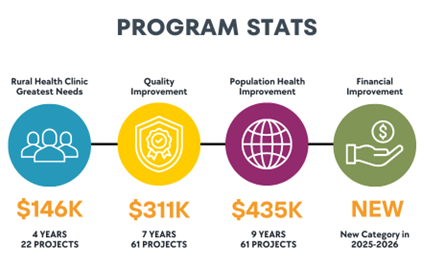
The focus of this funding is to improve quality of care, operational processes, and target community health improvement efforts. This involves leveraging existing data to pinpoint areas for enhancement, devising improvement strategies, and executing projects with measurable outcomes. In the 2025-2026 grant cycle, this program will support financial improvement proposals supporting the improvement and sustainability of critical access hospital and rural health clinics.
The goal is to empower rural facilities to develop and apply skills that elevate their health care delivery standards and ultimately improve the health of their populations.
This Micro Funding program was born out of the collaboration between the State Office of Rural Health (SORH) grant and the Medicare Rural Hospital Flexibility (Flex) Grant. Previously three separate micro funding programs were executed annually. To streamline processes, leverage available funding, and ensure hospitals and clinics have the greatest access to these programs, we have combined the application processes.
Awards range from $5,000 to $10,000 per awarded proposal.
Eligible rural facilities are welcome to submit multiple proposals to any of the micro funding focus areas.